
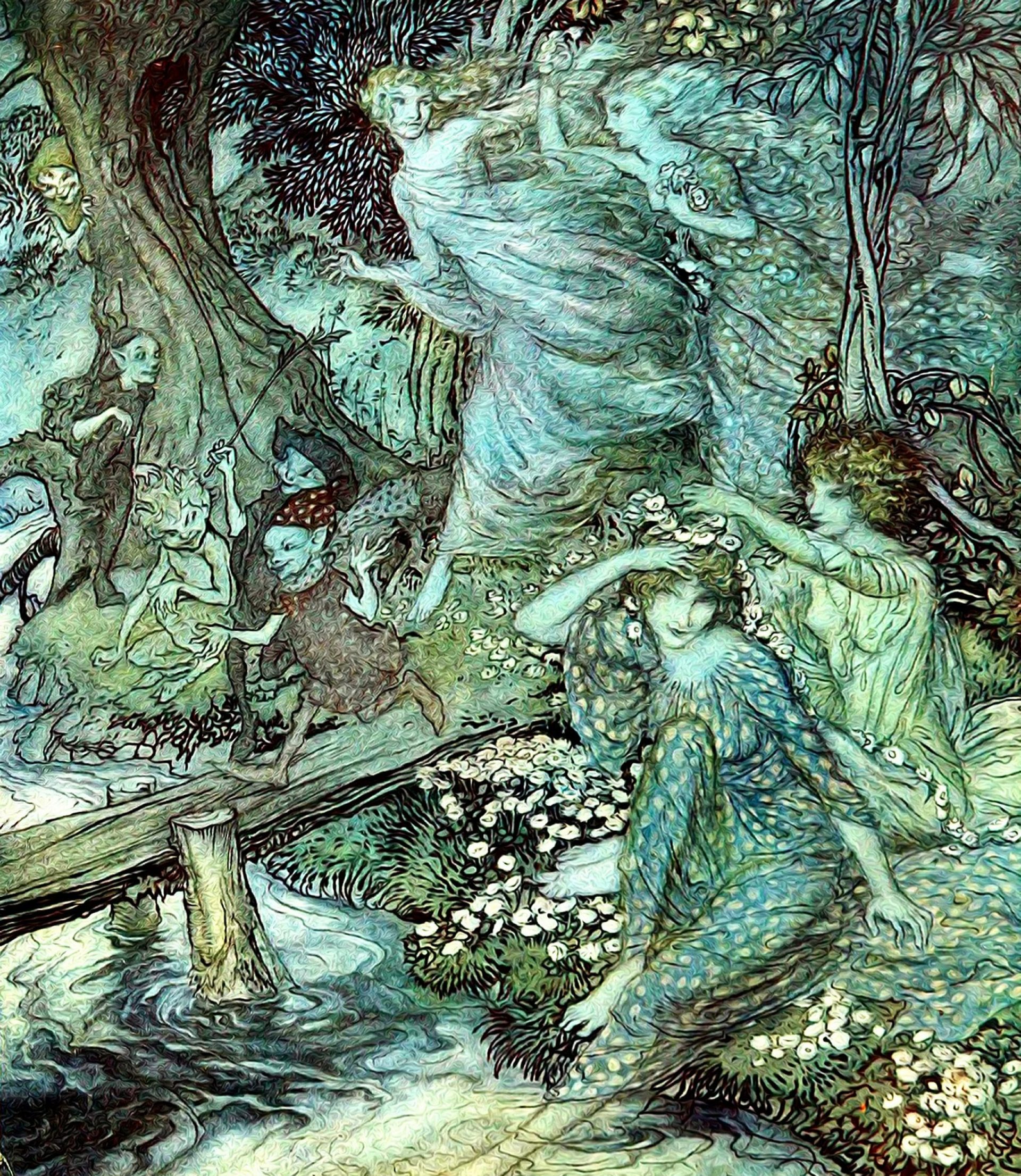
“Margaret at the River” by Brigs Larson
First Place Winner of our Winter 2024 Flash Fiction Contest
The ghost has been following her for three days now. He’d sprung up on the first day after she found the hand in the moss, nestled lovingly beneath the thistle and holding a fresh-cut harebell in its bodiless fist. She’d picked it up and cradled it like one of those corn dolls her brother used to make. When she returned to the road, the ghost was waiting.
“You have something of mine,” he’d said. He was dressed like far-away, face obscured by sunlight.
“Finders keepers,” she’d said, and kept walking.
Her new hand looks lovely, despite the way the skin stretches like old leather and crackles like dry grass. She sits in the field beside the river, weaving it rings from newly sprung harebells like her brother taught her, before he got sick from a cut to the thumb, before Mama cut off his hand and threw his body in the water with the February ice floes.
On the second day, the ghost was at her window while she was trying to sleep.
“It’s mine and you know it.”
“It’s not yours.”
“Look at my left hand. It’s the same.” He’d pressed his only hand up to the window, face obscured in darkness. She could hear the wind through his skull.
She couldn’t deny that it was the same. But she refused to say it.
“My brother had a hand like this. I’m keeping it for him,” she said instead.
“And if I know him?”
“Then you’ll tell him to come here.”
Margaret shut her curtains and put the hand to sleep under her pillow. She could feel its heartbeat through the feathers, thudding along with the blood in her ears.
On the third day, the ghost stares from the riverbank, face obscured by distance. When he doesn’t come to her, she goes to him.
“You’re watching me,” she says. The river is louder here, her heels sinking into the bank. She hasn’t come here since winter. She had forgotten how peaceful it is.
“Nothing else was working,” he says. No matter how much she squints, his face stays blurry.
“You haven’t brought my brother.” The water is rushing fast, trying to outrun the low tides of summer. The hand in her pocket is shivering.
“And why do you say that?”
Margaret squints harder at the ghost. “Because he would be here.”
The ghost is quiet, letting the sound of the river creep in. From the house, it’s a dull roar that hides under the fire crackle and Margaret’s muted conversations with Mama. In the night they shove extra blankets beneath the doors and up against the windows to keep the sound out.
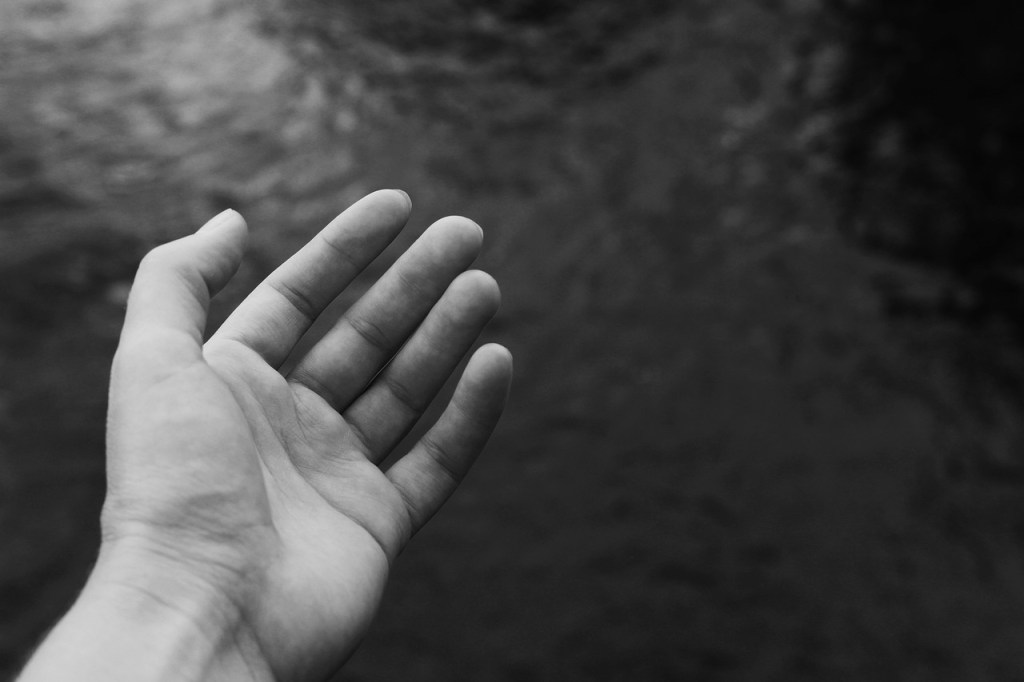
Here, there’s no hiding from it. The ghost extends his hand to Margaret, and the water laps up to his bare feet.
It takes her a moment, watching the way the water soaks through him like a rag with one end left in a full bucket. It creeps up his legs, running in streams down his fingers. The puckered skin where his hand should be opens up again. The water that runs over it drips black, then red. When it reaches his face, it washes away the smudge. Reveals.
She swallows hard. “You should have told me.”
“You wouldn’t have believed me.”
“That’s not true.”
“No.” Her brother pauses. “We’ll never know, will we?”
His hand is still extended, ice forming in his palm.
“You left.”
“I didn’t want to.”
“It isn’t fair.”
“Nothing is.”
She takes the hand out, still cradling it. She can barely see it through a cloud of her breath in the summer sun. She remembers holding this hand when she was too afraid to walk the road to the well, when she couldn’t balance on logs that crossed this river in the woods. She remembers copying this hand’s movement to weave baskets in springtime. She remembers taking a punch from this hand, when they were younger, when problems were something they could solve with blood and tears and cries to Mama. She remembers a warm winter, where the snow was more slush than anything, when she took this hand and they danced the steps Mama taught them so the darkness outside couldn’t get in. She remembers it, because she knows she will forget it.
Her brother melts into the river when she gives his hand back, sinking beneath the waves like he had in winter. Only this time, the birds are singing.
Interview with the Author
You describe yourself as a fantasy writer in your bio. What do you think it is about this genre that draws you and compels you to create?
“Fantasy is an incredibly human genre. It acts as a way for writers to discuss real-world topics and issues creatively and magically and in a way that we often haven’t seen before—that’s why I love it, I think. The best fantasy, to me, is about the people. I think it’s beautiful that we can relate to characters so separate from ourselves, even when they’re riding dragons or casting spells or raising worlds from rubble. I love creating worlds and characters that I can see myself in, and my hope is always that, in some small way, others can connect with my stories and my worlds as well.”
What is your experience of writing fantasy within the scope of flash fiction? With both fantasy and sci-fi often containing large, sweeping worlds and plots, how do you see it functioning in the compressed form, either in your story or elsewhere?
“Writing fantasy flash fiction is a challenge, to be sure. One of my favorite parts of writing fantasy is the worldbuilding, for the sheer amount of detail and thought I get to put into every aspect of a world’s function. In flash fiction, there simply isn’t as much room to flesh out a world… but that doesn’t mean it can’t be done. For me, fantasy in flash fiction relies on small magic and intentional world details rather than vast magic systems and intricate societal structures. Margaret’s world is her house and the river and the field between them. Magic is still indelibly there, but the reason for or origin of that magic isn’t as important to Margaret. It’s something that’s always been there and will always be there. I’ve found in my own writing that simply establishing the protagonist’s relationship with fantastical things like magic (Are they used to it? Does it scare them? Do they wonder at it, or are they ambivalent?) does so much to adjust the reader to the world in very few words, and teaches them how to approach the story right away”
The theme for our flash fiction contest was “hope.” We chose this theme in response to the steady increase of (understandably) cynical and despairing submissions we have been receiving. Uplifting ideas such as “hope” aren’t always independent singularities in life; your image of it sits quietly and comfortably with contrasting elements such as death, grief, and regret. What other elements do you find help give “hope” legs/support in this piece?
“I believe that memory is what gives hope meaning for Margaret. When you lose someone, they turn up everywhere—the clothes you wear, the receipts in your trash, the old voicemails in your phone—and it becomes choking. And yet, at the same time, those small things are something to hold onto. Hope, much like grief, is a long and arduous process that does not resolve itself easily. I wrote this story after I lost my grandmother, when the world felt darker than anything. I found my solace through the pieces of her, the clothes and the jewelry and the boxes of perfume that she left behind, and in this story that experience manifests in the hand Margaret finds. She treats the hand like her brother to make his absence bearable. And, much like I did, Margaret can’t bear to let her brother go because she refuses to acknowledge that he’s really gone. It’s only when she returns his hand to the waves and opens herself to her grief and her memories that she begins the long and painful process of healing.”
About the Author
Brigs Larson (they/them) is a writer and student from Rhode Island who draws on the weirdness of medieval and modern myth to shape their stories. Their stories can be found in Page Turner Magazine and Stork. One day they’ll find a way to be a pirate on an airship in the real world, but for now, they’ll stick with voice acting pirates in podcasts and re-watching Castle in the Sky.
 The Fantastic Other