
As part of our Summer 2025 release, we decided to bring back our Author’s Spotlight segment. This segment is designed to showcase fantastic authors who write on the speculative fiction spectrum, which is one of the founding missions of our magazine.
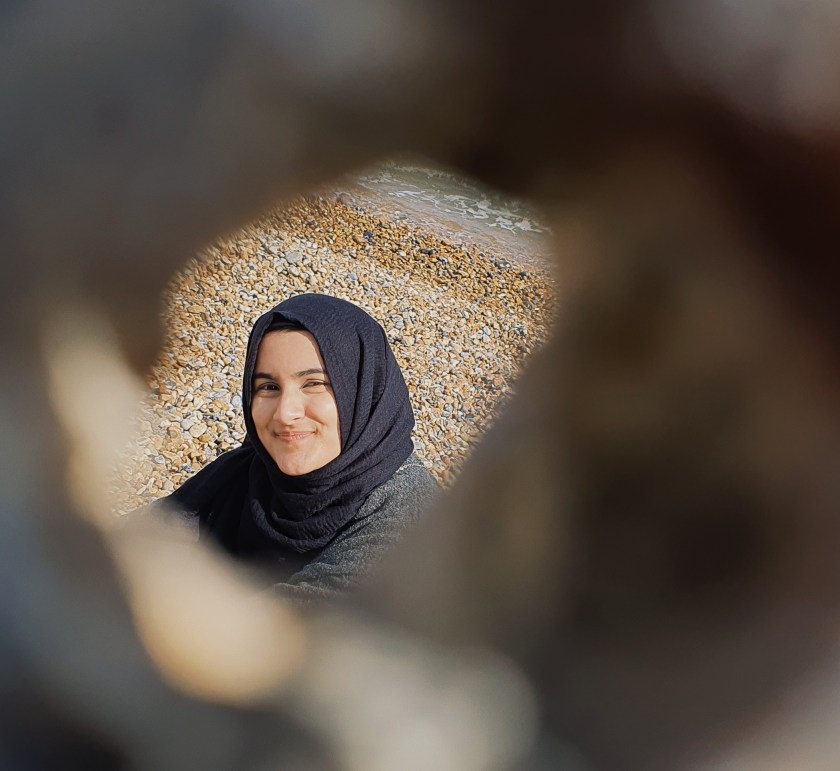
For this Author’s Spotlight, we reached out to Madeehah Reza, a talented speculative fiction author whose work we featured in our Summer 2024 issue. We invited Madeehah to discuss her journey as an author in this space and share her insights with other writers.
In addition to this exclusive interview, Madeehah’s original short fiction piece, “At The Feet of Guardians,” will be featured in our upcoming Summer 2025 issue. Keep an eye out for its release in early August because you won’t want to miss this one!
Q1 When crafting fantasy and science fiction works, how do you create a balance between unique worldbuilding and incorporating roots that link those worlds to our own?
Madeehah Reza:
“This was actually something I struggled with when beginning to write speculative fiction. During my Creative Writing MA, my tutor, Jane Draycott, often pointed out where the balance lay between the real world and that of fantastical worlds. I will share some of her wisdom here:
‘This balance between the fantastical and the realist, operating in the wide-open and ever-live field of magical realism, depends very much for its success on how a story establishes itself in its first presentation to its listener (i.e., on the opening passages). […] The fabulous/mythical/fantastical mode of the tale is a dramatisation or embodiment of that psychology/experience in action, metaphorically. So your primary hold from top to close, however fantastical, needs to have a convincingly recognisable human centre to it, in order that the reader-listener understands straight away (and not necessarily consciously) where on that magic-realism spectrum the story is situated. Getting the balance right between mysterious and mystifying is really at the heart […] will help bring forward the “real” character of this world. If you’re able to make clearer, much sooner and very simply, where we are envisaging Duska drink from a flask — at a desk in a room in a cottage in a forest. That could make all the difference to how fully we are able to imagine it and engage with it.‘ (feedback on Madeehah Reza’s short story, “Bark and Skin,” which was published in Wyldblood Magazine 2023)
“It’s crucial to ensure the ‘human elements’ (i.e., the things that the reader will recognise from reality) (are) written in a solid way to allow the reader to grasp something from the fictional world. This allows them to be more easily immersed into the fantastical elements that require some kind of suspension of belief. For example, in ‘The Moon-Drenched Dead,’ the way the protagonists interact with the physical reality of the island, the beach, the water, Poki the cat, etc., all supply a realistic foundation for the other fantasy elements to shine.”
Q2: As a co-founder of Overtly Lit, a magazine that celebrates the intersection of faith and art, how do you believe your personal experience of faith affects your own art and writing?
Madeehah Reza:
“For some reason, this was a particularly difficult question to try and synthesise an answer to, but I will try. Writing is as intertwined in my life and psyche as my faith is. To remove one from my life is to break a part of me and would render me an incomplete person. My faith and practise as a Muslim have enriched how I perceive the world, with all the joys of life and its many struggles and injustices. Both my personality and my understanding of a faith that embodies mercy at its foundation have influenced how I write characters whose interactions lean more on empathy and reconciliation rather than friction. This is perhaps most prominent in my recently published novella, Orphan Planet. Of course, a lack of friction does not always make for an interesting narrative! This is where I have had to learn how to embed tension between characters, especially when there is no clear right or wrong.
“Writing itself is an act of empathy as we extend ourselves into characters whose worldview we may not share, whose choices we may disagree with or even detest. But we still write them to explore what it means to be them and what it means to be human.”
Q3: Beyond being a writer, you also have a background in pharmacy. With one foot in the world of pharmaceutical science, a practice of exactitude, and the other in the more malleable world of speculative fiction, do you find your writing to be a natural extension of your daily life or a release from it?
Madeehah Reza:
“I am trained in exactitude, in being meticulous and thorough and detail oriented, but the malleable creativity of writing resonates far more with my natural state of being. While my professional and scientific background has been useful in the details and minutiae of certain sci-fi elements, I have been writing long before I was a science-oriented person. Writing has always been both an escape and a balm from the stresses of daily life. Perhaps part of it stems from the concept of having control over something — if not your own life, then a different world that you can create for yourself.”
Q4: What advice would you like to share with fantasy and science fiction writers who are struggling to find their niche or places for their work?
Madeehah Reza:
“Find a community. Writing can be a lonely practice. Whether that’s on social media or through community efforts in your local area, find a community of writers that you can support and be supported back in turn. It doesn’t even need to be within your own genre, though that does help.
“Write for YOU. Write because it’s fun. Write because, without writing, you’d feel lost. Write for yourself first, and then write to be published. We are often given this advice, and it feels frustrating when you just want to be published. The truth is you will be rejected many times, especially in a competitive field such as SFF, and that sucks. It can impact your self-esteem and how you view yourself as a writer. You need to go back to the original reason of why you write and you need to do this often to build a foundation that is strong. Understand what drew you to writing in the first place: that need for creativity, to create worlds unlike ours, to create characters that only exist because you poured your love into them.”
Q5: Anything else you would like to share with readers?
Madeehah Reza:
“You can keep up to date with my recent publications on my website. My very first book has found its way into the world, a science fiction novella called Orphan Planet, published by Luna Press Publishing. It explores the struggles of loneliness, of human connection, and what it means to call somewhere ‘home.’ If any of that resonates with you, feel free to check it out!”
More About Madeehah Reza:
Madeehah is a writer and pharmacist from London, UK. Her first novella, Orphan Planet, was published with Luna Press Publishing in 2025 and was shortlisted for the 2021 Future Worlds Prize for SFF writers of colour. Her short fiction has been published in several print and online magazines, including Apparition Lit, Luna Station Quarterly, and All Worlds Wayfarer. You can find more of her work on her website madeehah.carrd.co and find her on Twitter @madeehahwrites.
 The Fantastic Other